
Fayette County Criminal Court Cases
Fayette County criminal court cases do not all begin and end at one level. General Sessions Court handles misdemeanor prosecutions, warrants, bail, initial appearances, and preliminary felony proceedings. A felony that advances through a grand-jury indictment reaches the Fayette Circuit/Criminal Court in Tennessee's 25th Judicial District. Municipal courts in Oakland, Somerville, and Piperton keep their own ordinance and limited traffic files, not the full county felony docket.
The Fayette County Circuit Court Clerk keeps the Circuit/Criminal and General Sessions case records. The file may include a complaint, warrant material, an indictment, motions, hearing entries, orders, and the judgment. A court record is the best local source for the filed accusation and final outcome. It should not be confused with a sheriff report, which describes an agency event, or a jail entry, which records intake. Case numbers and approximate filing years help the clerk distinguish people with similar names.
Fayette Felony Court Routes
A felony case normally starts in General Sessions for the first appearance, bond decision, and possible preliminary hearing. If probable cause supports moving forward, the case can go to the grand jury. A true bill is an indictment; a no-bill means the grand jury did not return one. Once indicted, the charge proceeds in Circuit/Criminal Court for arraignment, motions, plea talks, trial, judgment, and sentence.
The Tennessee General Sessions Courts overview explains the lower court's role. Its Fayette image below helps identify the official court source rather than an unofficial case aggregator.
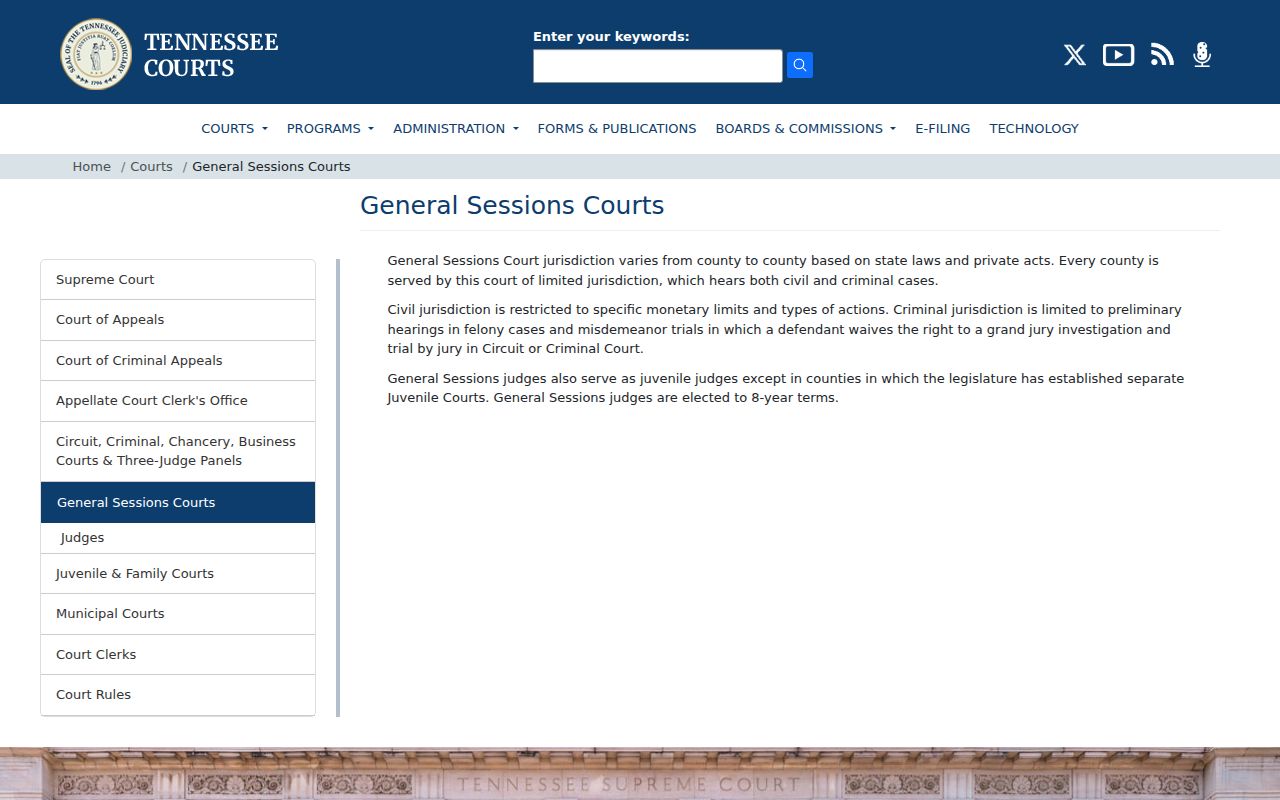
That split matters when asking for a record. A recent felony may have a General Sessions number before any Circuit indictment exists, while a misdemeanor can be resolved without ever moving to the felony trial court.
Searching Fayette County Case Records
No verified public Fayette County trial-case name portal was found in the official sources. The reliable route is to call, write, or visit the clerk and give enough detail to locate an existing file. Ask whether a public terminal or electronic document view is available for the relevant year. Keep the statewide appellate search for appealed cases only.
- Identify the likely court. Use General Sessions for a misdemeanor or early felony stage and Circuit/Criminal Court for an indicted felony.
- Give the Fayette clerk the full party name, an approximate filing year, and the case number when known.
- Ask for the docket sheet first. It supplies the sequence needed to select pleadings, orders, or hearing entries.
- Request the judgment and disposition for the result. Ask whether each charge has its own outcome.
- Confirm the current search, copy, and certification charges before ordering. No official Fayette fee schedule was located.
The statewide Public Case History tool is useful only after a matter reaches an appellate court. Its fields are included here so readers do not mistake it for the Fayette trial docket.
| Field Label | Type | Required | Notes |
|---|---|---|---|
| Basic keyword | Text | Yes for basic search | Searches public appellate case history. |
| Case Number | Text | No | Full numbers or fragments can work in advanced search. |
| Case Style | Text | No | Uses the caption shown on the appeal. |
| Party Name | Text | No | Searches a named party to the appellate case. |
| Business/Organization | Text | No | Searches an entity named in the caption. |
Fayette Court Address Mismatch
Two official Fayette County court addresses appear in public directories. The AOC courthouse locator lists the Circuit, Criminal, and Chancery Courts at 16755 U.S. 64 in Somerville. The named clerk listing uses 705 Justice Drive, also in Somerville. These may reflect postal and campus addressing, but the research does not establish that they lead to the same public counter.
The AOC circuit and criminal clerk directory is the official place to confirm the current Fayette clerk contact.
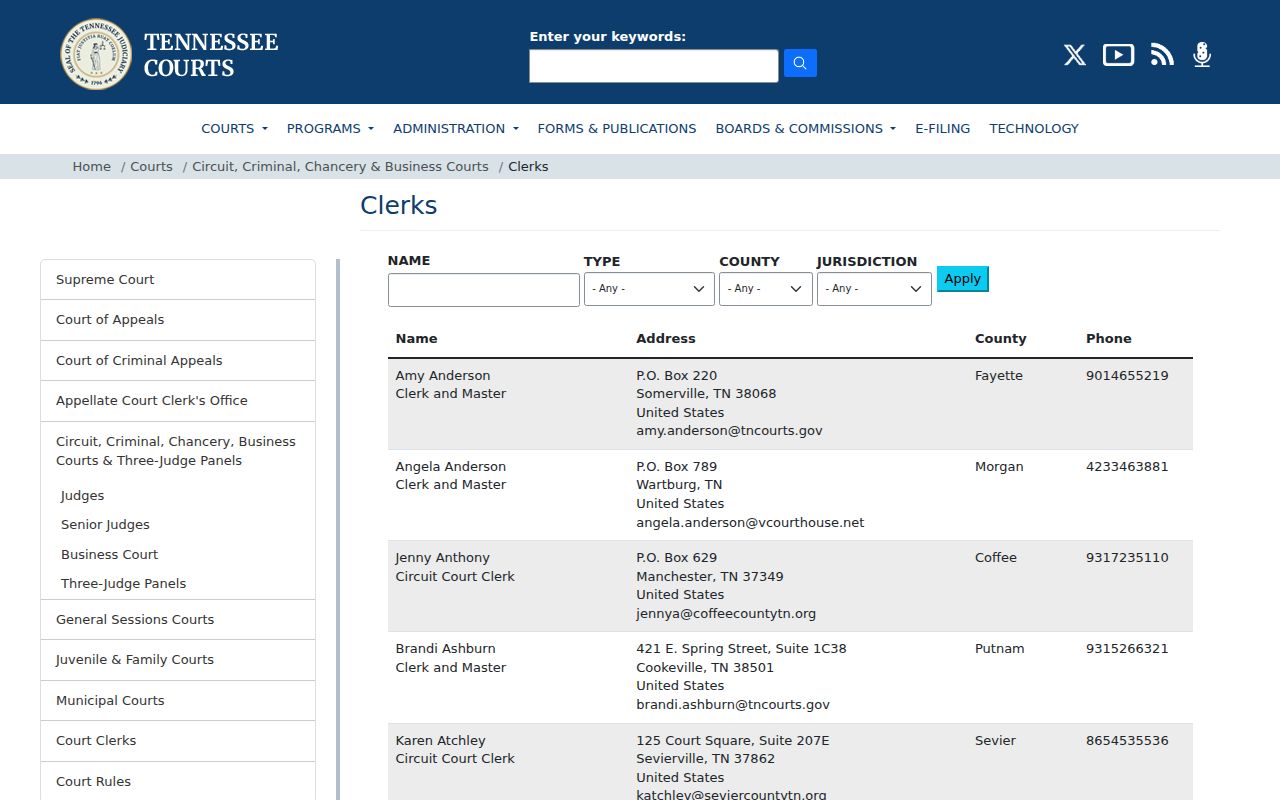
Call before travel and state which case level and document you need. The sheriff also warns that access to the Criminal Justice Center changed with the State Route 460 bypass, so old driving directions may fail even when the street address looks right.
Note: Confirm the entrance and records counter before a Fayette court visit because the two official addresses and bypass routing can cause confusion.
Inside a Fayette County Case File
A Fayette County case file records the court's work, not just the fact that law enforcement made an arrest. Start with the docket, which is the chronological index of filings and events. Then select the charging document and judgment. One case can contain several counts, and each count can end differently, so a single status label should not stand in for the complete record.
| Case Number & Court | Identifies the court level, division, and individual prosecution file. |
|---|---|
| Charging Document | Shows the filed accusation and statute, such as a complaint or indictment. |
| Docket Entries | Lists filings, orders, hearings, continuances, and other events by date. |
| Hearing Dates | Records scheduled and completed proceedings, including arraignment and trial settings. |
| Disposition & Judgment | Shows whether each charge ended by conviction, dismissal, acquittal, or another result. |
| Sentence & Conditions | States confinement, probation, fines, costs, restitution, or other court-ordered terms. |
Attorneys, bond entries, and financial records may also appear. Some documents contain protected identifiers or other redactions, and papers that never become part of the filed court record will not be in the clerk's file.
Reading Fayette Court Dispositions
Outcome terms need to be read charge by charge. A dismissal ends the charge without a conviction on that count. Nolle prosequi means the prosecutor formally chose not to continue it at that time. An acquittal is a not-guilty result after trial. A no-bill means the grand jury did not return an indictment, while a true bill means it did.
- Disposition
- The recorded outcome of one charge, not merely the overall case status.
- Diversion
- A conditional path that may lead to dismissal and possible expungement after successful completion.
- Merged count
- A count combined for judgment purposes; the judgment must be read to understand its effect.
- Certified disposition
- An official clerk copy used when proof of the final result is needed.
If TORIS lacks the Fayette County court result, obtain a certified disposition from the clerk and follow TBI's correction instructions. A court judgment can appear before the repository links it to the original fingerprint-supported arrest cycle.
How a Criminal Case Moves
Each Fayette County prosecution follows the path that fits the charge. A misdemeanor can be resolved in General Sessions. A felony commonly proceeds from its preliminary stage to the grand jury and then to Circuit/Criminal Court. Motions, discovery, and hearings occur before a plea or trial. The judgment records the result, and sentencing follows a conviction.
Case flow: Charges Filed › Arraignment › Pretrial › Plea or Trial › Disposition › Sentencing
An arrest and booking can come before the filed charge, but they are not the court case itself. Dates vary by the facts and calendar, and no Fayette-specific time promise was found. A later appeal creates a separate appellate record while the trial clerk retains the originating file.
Fayette Criminal Appeals Online
The Tennessee appellate Public Case History system covers appellate cases filed after September 1, 2006, with information current through the prior business day. Many documents filed after August 26, 2013 are available as PDFs. A case detail can show overview data, milestones, parties, document history, and the appellate record inventory.
Milestones can include the appeal filing, record filing, briefing, argument, decision, disposition, a Supreme Court application, and closure. The record inventory separates the technical record, transcript of evidence, exhibits, and supplements. This helps follow an appealed Fayette judgment, but it cannot find an ordinary local trial case that never reached an appellate court.
The Tennessee Supreme Court Rule 34 page states the public-access framework for court records.
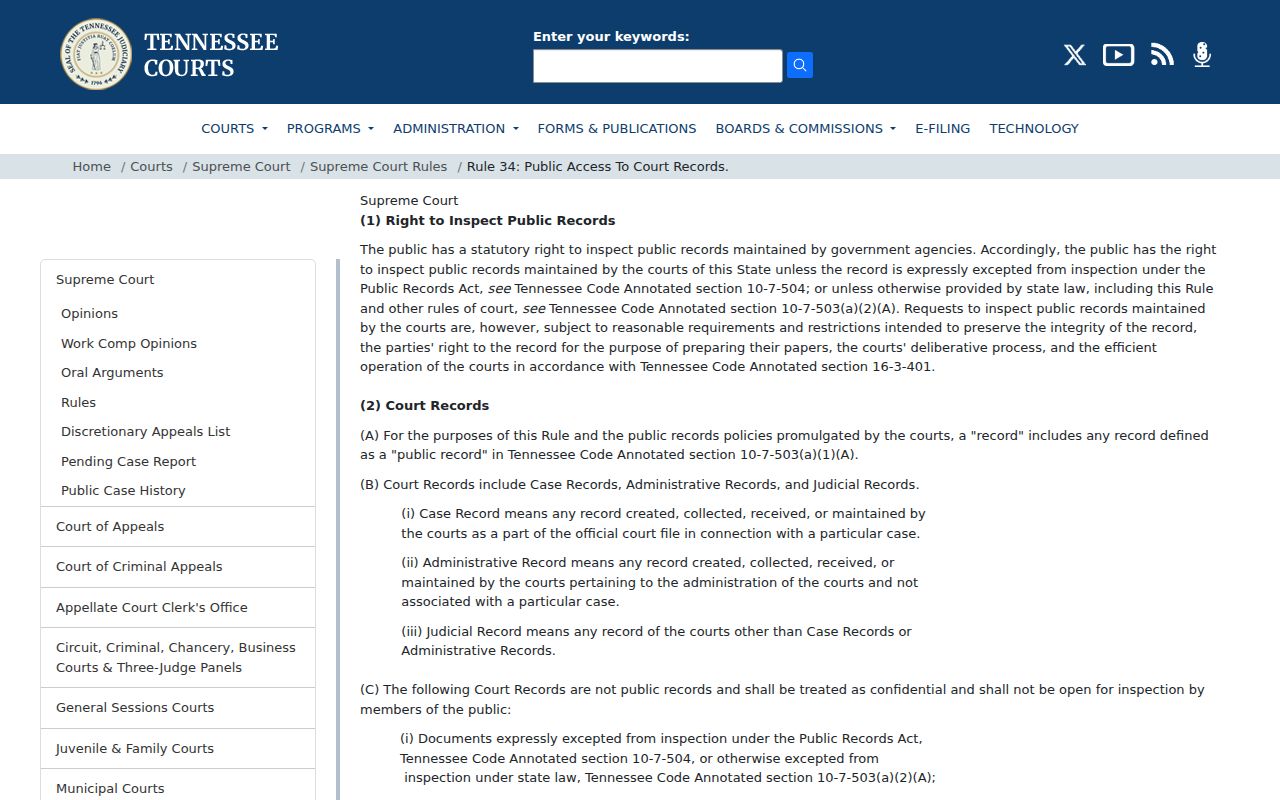
Rule 34 supports inspection of court case records while allowing limits needed to protect confidential information, file integrity, and court operations.
District 25 Fayette Court Offices
Fayette County shares the 25th Judicial District with Hardeman, Lauderdale, McNairy, and Tipton Counties. The district structure does not mean one judge handles every Fayette matter. Readers should consult the current AOC assignment information and the case docket instead of assuming a judge from a general district list is assigned.
The District Attorney General's Somerville Criminal Office is at 16814 Highway 64, Somerville, TN 38068, with telephone (901) 465-7351. The District 25 Public Defender's Fayette office is at 16600 Highway 64, Somerville, TN 38068, with telephone (901) 465-7330. Those offices participate in cases, but the clerk remains the custodian of the public court file.
The District 25 Attorney General page identifies the five-county prosecution district.

The district page helps confirm the prosecution office serving Fayette, while case-specific filings and outcomes still come from the court docket.
Case Record Access & Restrictions
Tennessee Supreme Court Rule 34 presumes access to court case records, subject to reasonable procedures and laws that make some material confidential. Juvenile records, sealed or expunged matters, victim and minor identifiers, protected personal data, and other confidential categories may be withheld or redacted. A missing online entry does not prove that a Fayette County file never existed.
Under the Tennessee Public Records Act guidance, requests should identify existing records rather than ask a custodian to research a question or create a new compilation. For a court file, supply the case number, party name, court, and date range. Ask the clerk to explain the legal basis for a denial and whether nonexempt portions can be released.
Older Fayette County criminal court cases may be stored in paper, microfilm, or an archive outside the active counter. Ask whether the clerk can search the older index by name and year, where the file is kept, and whether certified copies are available. Confirm all charges before payment because official Fayette search and copy fees were not located.