
Checking Criminal History in Oakland
Use Oakland channels first when a town officer wrote the report or the matter is a municipal citation. The police department does not publish a report-copy portal or public blotter, so the practical start is a call or counter request. A report number, date, location, and type of event will help staff locate an existing record. The court clerk handles the citation record, not the police narrative. If an arrest led to jail intake or a criminal charge outside the municipal court's limited scope, the useful file shifts to Fayette County.
- Call Oakland Police at (901) 465-0070 on a weekday and identify the report or event as precisely as possible.
- Ask for the current inspection or copy process, fee, ID rule, redactions, and delivery choices before sending payment.
- For a town citation, call the Court/Traffic Clerk at (901) 465-3886 and ask for the docket or disposition.
- Check Fayette County booking and court channels if the event involved custody or a criminal prosecution.
- Use Tennessee Open Records Information Services when a Tennessee-wide, name-based repository result is needed.
TORIS costs $29 and covers Tennessee misdemeanor and felony arrests reported by fingerprint. It is name-based, omits aliases, and is not proof that a possible match is the same person. A local court disposition may also appear before it reaches the state repository.
Oakland Police Records on Doss Circle
Oakland Town Hall and the police department share the civic address at 170 Doss Circle, Oakland, TN 38060. Town Hall is open Monday through Friday from 8:00 a.m. to 4:30 p.m. The police line is (901) 465-0070, and the listed fax is (901) 465-0719. Chief Chris Earl is identified in current Tennessee municipal records. After normal hours, Fayette County Sheriff dispatch answers at (901) 465-3456. Dispatch can route a live call, but it should not be treated as the records counter.
Oakland has no verified public report-request form, online arrest log, or published copy-fee schedule. Ask which method the department now accepts and whether the requested report is ready for release. A pending investigation, juvenile information, victim details, medical facts, or protected personal data may be held back or redacted. The official Oakland site shows the town channel that routes residents to police and court services.

The town site is a routing source, while the police counter remains the direct source for an Oakland officer's report.
Oakland Police Department Records
An Oakland incident report can contain the call narrative, place and time, alleged conduct, witnesses, evidence, and an officer's action. An Oakland arrest report records the police event. It is distinct from a Fayette County jail booking record, which documents intake, and from an Oakland court file, which shows the filed charge and outcome. Request the city-created report from Oakland Police even if the person was later booked at the county jail.
Describe the record rather than asking the department to research a broad question. Supply the event or report number if known, an approximate date and time, the location, a short date range, and the record type. Ask for an electronic copy when available and an estimate before chargeable work begins. If part of the report is exempt, a requester can ask for the nonexempt portions and the legal basis for any withheld material.
Oakland Citation and Criminal Record Split
Oakland citations and county criminal cases do not share one Oakland docket. Oakland Municipal Court handles the town's limited traffic and ordinance business. A misdemeanor or felony prosecution may involve General Sessions and, for an indicted felony, the Fayette Circuit or Criminal Court. The clerk at each level keeps the docket and filed orders for that court. Oakland Police may still keep the original report, so one Oakland event can require two requests.
| Record sought | Start here | What it proves |
|---|---|---|
| Officer narrative | Oakland Police | What the officer recorded about the event |
| Town citation | Oakland Court/Traffic Clerk | Municipal setting, payment, and disposition |
| Jail intake | Fayette County Jail | Booking, bond, hold, or release data |
| Criminal case result | Fayette Circuit Court Clerk | Filed charge, hearings, judgment, and sentence |
The filed outcome matters most when a booked charge changed, was dismissed, or moved forward by indictment. Full county case detail belongs in the Fayette County criminal court cases record.
Oakland Arrests and Bookings
No official source reviewed confirms that Oakland operates a town jail. For a custodial arrest, use the Fayette County Jail channel unless Oakland Police identifies a different temporary hold. The county's current-inmate portal can be searched by name, arrest date, held-for agency, cell block, custody date, or release date. “Held For Agency” is especially useful because it can point back to Oakland Police as the keeper of the narrative report.
An Oakland booking row is not a finding of guilt. It may show intake details and the charge received by the jail, but the prosecutor can amend or decline that charge. Call county Booking at (901) 465-5247 if a person has been released or does not appear in the current roster. Then use Oakland for the police report and the correct court clerk for the final result. The broader Fayette County arrest lookup explains those county channels in depth.
Oakland Court Rules Affect Record Visits
Oakland publishes detailed courtroom conduct rules. Clothing restrictions and the requirement that devices remain silent can affect whether a person enters the room for a hearing. A visitor who cannot enter should not assume the citation has vanished. Ask the Court/Traffic Clerk whether the matter can be handled at the clerk window, whether a new setting is needed, or whether the record can be supplied without courtroom access.
The citation itself is the first scheduling source because Oakland prints the court date and time on the ticket. Arrive early when attendance is required. A person who plans to pay before the hearing can use cash, a money order, or a card or debit payment with a fee. That payment route belongs to the municipal citation. It does not resolve a separate Fayette County criminal charge, and a payment receipt should not be mistaken for a certified court disposition.
The Oakland Municipal Court information lists the local contact, payment routes, and court expectations.
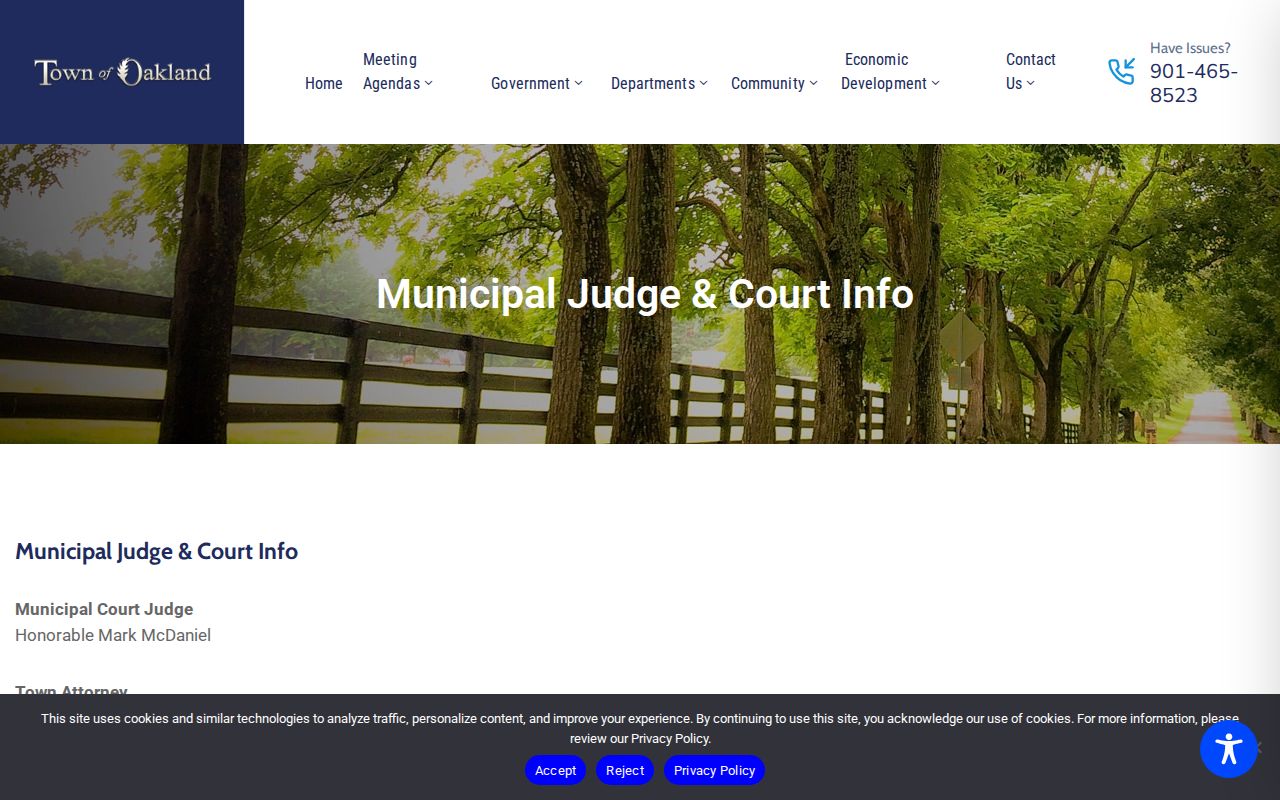
The published rules make a phone call before a court visit useful, especially when the goal is a copy or status rather than attendance at a hearing.
Municipal Court Records in Oakland
Oakland Municipal Court handles the town's traffic and city-code matters. Judge Mark McDaniel is the listed municipal judge. The citation supplies the court date and time, and the town directs people to arrive early. The Court/Traffic Clerk can be reached at (901) 465-3886 or through the police number. No public case-search portal was found, so the clerk's phone and counter are the lookup path.
| Court Name | Oakland Municipal Court |
|---|---|
| Case Types Heard | Town ordinance and limited traffic matters |
| Case Lookup Channel | Court/Traffic Clerk by phone or at the town counter; no verified public portal |
| What the Docket Shows | Citation setting, town case status, payment, and municipal disposition |
| Copies & Fees | Confirm the current copy method and amount with the clerk; no official schedule was located |
Before a hearing, Oakland accepts cash, money order, or card and debit payment with a fee. Payment is not the same as a certified disposition. Ask for the exact record needed, especially when documenting how a citation ended.
Oakland Records and the TBI Inquiry
A statewide source can become part of an Oakland event when another agency takes an independent role. The Tennessee Bureau of Investigation's officer-involved shooting list records a December 24, 2024 Fayette matter involving Oakland Police. That list is an investigation entry. It is not a final finding about fault, guilt, or the merits of any allegation.
The TBI investigation listing shows where the state-level entry can be checked.
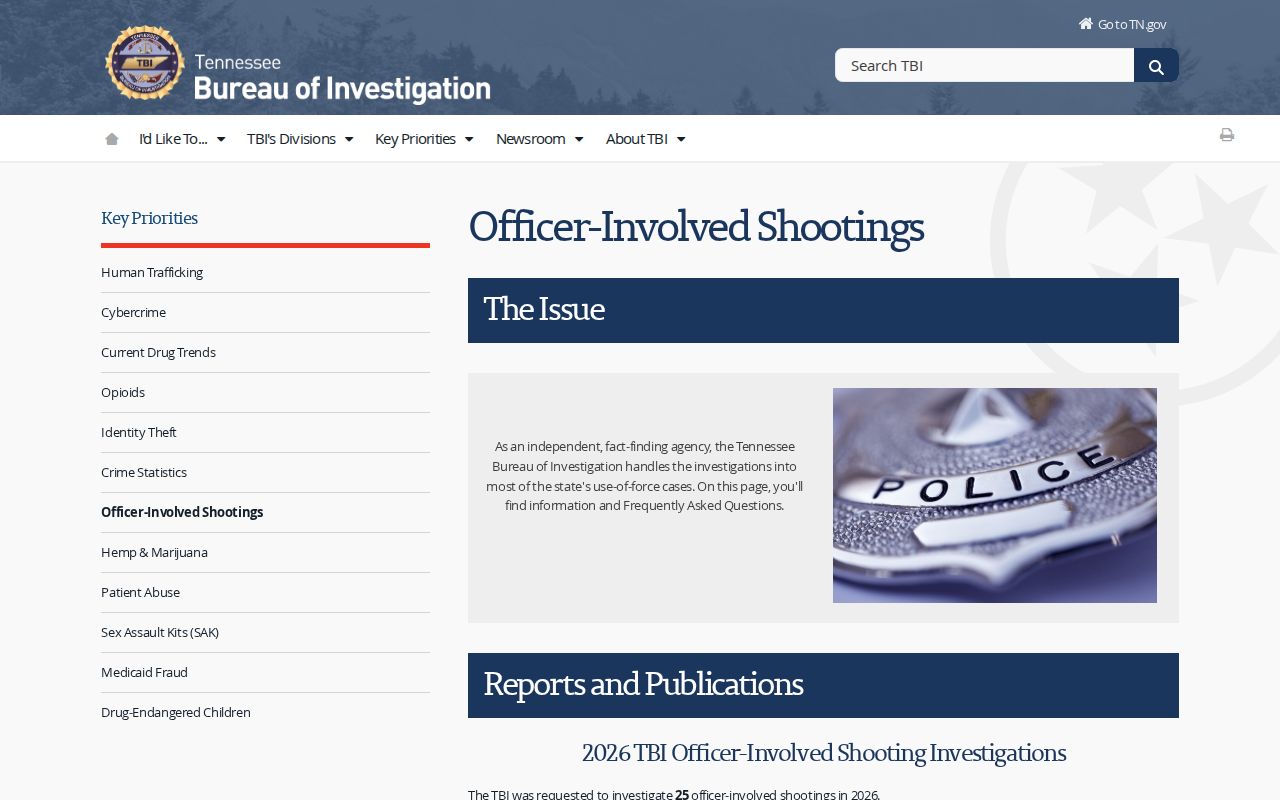
The entry also illustrates why Oakland Police records, state investigative material, and a later court file must be requested from their separate custodians.
Where Oakland Records Go
An Oakland officer first creates the city report. If custody follows, Fayette County Jail makes a booking record and sends fingerprint-supported arrest data into the Tennessee reporting chain. The prosecutor and courts create the formal charge, hearings, and result. Court staff then report dispositions to TBI, though missing or unmatched data can cause delay.
Record flow: Oakland PD › Fayette County Courts › Tennessee Bureau of Investigation
For fresh Oakland activity, ask the police department and jail first. For a resolved charge, use the court judgment. TORIS is the state repository slice, not a replacement for the local report or the complete court file. If the state result lacks an outcome, obtain the court disposition and use TBI's correction process.
Correcting an Oakland Record Mismatch
Begin with the office that owns the disputed part. Oakland Police should review an error in its incident or arrest report. Fayette County should review its booking fields. The court clerk should address a docket or judgment problem. TBI handles a repository result only after the source record is clear. Keeping copies of each response helps show where the mismatch began.
For a TORIS identity dispute, TBI instructs the subject to obtain fingerprints from local law enforcement, send a letter that identifies the questioned charges, and include a $24 cashier's check or money order. This process compares fingerprints to the questioned history. It is different from asking Oakland Police to amend its own report.
Oakland Crime Records Without Guesswork
Oakland has grown along U.S. 64, but population growth alone does not show what appears in police files. Official crime counts should come from TBI CrimeInsight and be filtered by agency and year. The research did not yield a reliable current extract, so no unsourced total belongs in an Oakland criminal records discussion.
Use TBI CrimeInsight for aggregate trends, then use Oakland Police for an actual event record. Statistics describe reported activity. They do not identify a case outcome and must not be read as convictions. A docket or judgment is the source for what happened after a charge was filed.
Keep the source year with any Oakland figure because the official city population series do not all use the same method. Tennessee's 2025 certified count places Oakland at 8,936, while Census QuickFacts gives a separate 2025 estimate of 10,835. Those values should not be blended. Neither number reveals how many Oakland reports were released, how many booked charges became convictions, or whether one person appears in a record. The correct file still comes from the police, jail, court, or TBI according to the question.
Public Access Rules in Oakland
Oakland municipal and police records are subject to Tennessee access rules, but access is not absolute. A requester should identify an existing record with a useful date range, place, agency, and report or case number. The custodian need not answer a research question or create a new list. Sealed matters, juvenile files, protected identifiers, victim data, and active investigative material may be restricted. Ask for any part that can be separated and released.
Key Statutes:
Tennessee Public Records Act, T.C.A. § 10-7-503 - Tennessee citizens may inspect municipal public records unless another law makes them confidential.
T.C.A. § 10-7-504 - Specific confidentiality rules can override general public access.
Tennessee Supreme Court Rule 34 - Court records are presumed open unless an exclusion or court order applies.
A city record can be public yet still contain redactions. Ask Oakland for the current request route and written grounds for any denial.