
Checking Criminal History in Fayette County
Begin with the kind of fact you need. Current custody belongs with the Fayette County Jail. A filed charge, hearing, dismissal, or sentence belongs with the Circuit Court Clerk. A deputy's account of an event belongs with sheriff Records, while a city officer's report stays with that police department. TORIS provides the Tennessee repository view, and FOIL covers current or former felony custody and supervision through the Tennessee Department of Correction. Each source answers a different part of the record.
Use a full name, a date range, and a case, report, or booking number when one is known. Name spelling matters, but a name match alone does not prove identity. Follow this order for a careful Fayette County criminal record search:
- Ask the Fayette court clerk for the local docket and final disposition when the outcome is the key issue.
- Call the sheriff or the arresting city police department for its own incident or arrest report.
- Use the jail portal for custody and booking facts, then use the held-for agency field to find the report custodian.
- Order TORIS when a Tennessee fingerprint-reported history is needed, and read its name-search limits before paying.
- Check FOIL for a felony sentence, prison history, probation, or parole, then request a certified source record for any correction.
These routes overlap, yet none is a substitute for the rest. The clerk may show a final judgment before the state repository links it to an arrest cycle.
Fayette County Records at Justice Drive
Two official addresses can appear in directions for Fayette County criminal records. The Sheriff's Office lists the Criminal Justice Center at 705 Justice Drive in Somerville. The Tennessee courthouse directory lists Fayette Circuit, Criminal, and Chancery Courts at 16755 U.S. 64. Those entries may describe the same campus through different postal or access points. Call the intended counter before travel, especially for an older file that may be stored away from the active criminal desk.
The Fayette County Sheriff's Office homepage also warns that access changed with the State Route 460 bypass. Since December 31, 2024, visitors must approach from U.S. Highway 64 east of Teague Store Road.

The posted route matters because an old map can lead near the justice complex without reaching the usable entrance. Sheriff administrative hours are 8:00 a.m. to 4:00 p.m., and the main line is (901) 465-3456. The office is the local starting point for deputy reports, jail records, warrant routing, dispatch material, and court-security questions. It does not hold a city officer's original narrative or replace the clerk's filed court case.
Tennessee Official Background Checks
The Tennessee Bureau of Investigation, Criminal Justice Information Services Division, is the state's central criminal-history repository. Its public TORIS product is a $29, nonrefundable name-based search of Tennessee misdemeanor and felony arrests reported through fingerprints. It may return a possible matching Tennessee history, but it is not a fingerprint-confirmed identity search. Aliases are not included. Ordinary juvenile information is excluded unless a juvenile case was transferred for adult prosecution.
TAPS uses IdentoGO or IDEMIA electronic fingerprint locations for checks authorized by a requesting agency. The person being printed needs the agency's OCA code and should use the live Tennessee locator for a current appointment; no Fayette County enrollment location was confirmed. A common published collection and TBI/FBI processing amount is $37.15, but the exact fee depends on the authorized program. For a nationwide self-review, the FBI Identity History Summary uses the subject's fingerprints and a separate federal request process.
When identity is in doubt, fingerprints carry more weight than similar names. TBI also accepts a fingerprint comparison challenge to a questioned TORIS result for $24 by cashier's check or money order.
Fayette County TORIS Record Search
TORIS begins with the requester's contact information, then moves to the subject search and payment. Review the subject's spelling with care. TBI says the ordinary name request should not include fingerprint cards. Online cards listed by TBI are Visa, MasterCard, and Discover. The mail route also permits listed checks and money orders, but not cash or American Express. A result paid by personal check may be held an estimated seven to ten days for clearance.
The official TORIS search interface shows why the requester and search subject are separate parts of the transaction.
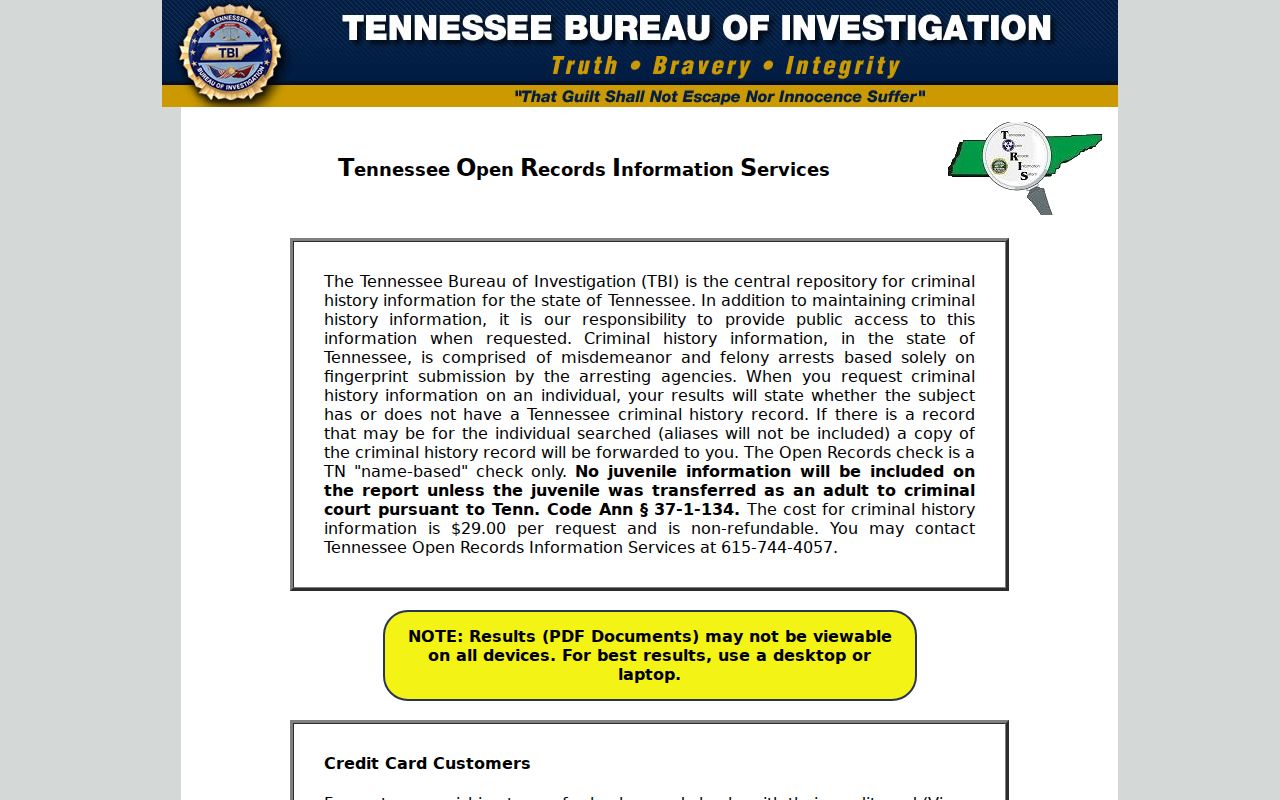
The first screen collects the following requester fields before a Fayette County criminal record request proceeds:
| Field | Type | Use |
|---|---|---|
| First and last name | Text | Mandatory requester identity |
| Street, city, state, ZIP | Text and dropdown | Mandatory contact address |
| Phone | Text | Mandatory contact field |
| Email and confirmation | Text | Mandatory; confirmation goes here |
Download the result on a desktop or laptop if a phone does not display the PDF. Keep the transaction details in case a court disposition is missing or the identity may be wrong.
Criminal Record Types
Fayette County agencies create separate files as a matter moves through the justice system. The officer writes an incident or arrest report. Jail staff make a booking record. A prosecutor chooses charges, and the clerk opens a court file. TBI links fingerprint-supported arrest cycles with dispositions reported by courts. TDOC creates custody and supervision data after a felony sentence enters the state system.
A search should name the product, not just ask for a person's “criminal history.” These common terms help keep the request on track:
- Booking record
- Jail intake data such as booking time, agency, charge received, bond, holds, and release status. It does not prove guilt.
- Court docket
- The clerk's dated list of filings, hearings, orders, and case events.
- Disposition
- The result recorded for a charge, such as conviction, dismissal, acquittal, or a diversion outcome.
- Capias
- A court command to take a person into custody, often tied to a missed appearance or post-judgment default.
- FOIL record
- A TDOC felony custody or supervision profile, not a full county criminal history.
For filed charges and judgments, the Fayette County criminal court case file is more direct than an intake record. Recent arrest and booking channels are covered through the county's official arrest lookup routes.
Fayette County Inmate and Warrant Portals
The sheriff links separate Zuercher portals for current inmates and active warrants. Their fields make it possible to narrow a Fayette County record without relying on a broad name query.
| Portal | Search fields | Best use |
|---|---|---|
| Current inmates | Name, race, sex, cell block, arrest date, held-for agency, custody or release date | Current local booking and custody |
| Warrants | Name, race, sex, issue date, DOB, age, bond, charge | Published Fayette warrant entries |
The held-for agency field is especially useful. It can point a reader from a jail entry to the sheriff, Oakland Police, Somerville Police, Piperton Police, or another office that created the event report. Warrant results may show identity facts, issue date, bond, charge, and comments, but the standard table does not promise an issuing court or case number. Verify an active matter with the sheriff or the relevant court before acting on an old screen capture. Tennessee has no verified public statewide comprehensive warrant portal.
Jail Booking at (901) 465-5247 is the fallback when a person was released or an entry is missing. The jail can also explain its proof-of-incarceration process. For one's own proof, the sheriff states that valid identification is required and that requests may be made in person or by mail. No current fee was published in the material reviewed.
Note: A jail charge reflects intake and can change when a prosecutor files the court case.
Inside a Fayette County Criminal Record
A complete Fayette County criminal record depends on the source. A repository history groups identity data with fingerprint-supported arrest cycles and the outcomes that courts report back. A court case contains the filed charge, hearings, bond entries, motions, disposition, judgment, sentence, and costs. A jail record focuses on intake, custody, and release. Read the heading and custodian before treating a field as final.
| Name and identifiers | Name, date of birth, and state or agency identifiers used to distinguish records. |
|---|---|
| Arrest and booking | Arresting agency, date, booking number, intake charge, bond, hold, and release facts. |
| Charges and statutes | The alleged offense at arrest or the formal count filed in court, which may differ. |
| Disposition | The result for each count, including dismissal, conviction, acquittal, or diversion. |
| Sentence | Confinement, probation, fines, costs, restitution, and other terms ordered by the court. |
| Custody or supervision | County jail status or TDOC prison, probation, parole, and release information. |
A “charge” on a booking page is not the same as a conviction. Likewise, one case can contain several counts with different results. Request the judgment when terms such as merged, nolle prosequi, no-bill, or diversion affect the meaning.
Fayette County Records Flow to TBI
The local record chain begins with an officer and the jail. Booking staff collect identifiers and fingerprints, then fingerprint-supported misdemeanor and felony arrests enter TBI's reporting stream. The prosecutor and courts add the formal accusation and case events. Fayette County clerks later report dispositions so the repository can link an outcome to the correct arrest cycle. Missing data or identifiers can cause TBI to reject a disposition that cannot be matched.
The Tennessee Bureau of Investigation agency information identifies TBI's statewide public-record and registry role.

This flow explains why the Fayette County court file can show the final result before TORIS does. It also shows why the right correction starts at the source. Ask the arresting agency to fix its event data, the clerk to correct its judgment or docket, and TBI to review the repository cycle after the certified local record is accurate.
Arrest and report → jail booking and fingerprints → prosecution and court docket → disposition report → TBI repository cycle.
Public Access Laws in Tennessee
The Tennessee Public Records Act generally lets Tennessee citizens inspect county and municipal public records unless another law makes the material confidential. A request must describe an existing record with enough detail for the custodian to find it. The office need not answer a research question or create a new report. Active investigations, juvenile files, victim details, medical facts, protected identifiers, and sealed or expunged records may be withheld or redacted.
The Tennessee General Assembly publishes the official legislative source used to confirm current code and public chapters.

Use current law when a record-access question turns on an exemption or a recent amendment. The main rules are easier to apply when stated in plain terms:
Key authorities:
T.C.A. § 10-7-503 permits access to public records subject to lawful exceptions and a clear request.
Tennessee Supreme Court Rule 34 presumes public access to court records unless a rule or law excludes them.
T.C.A. § 40-32-101 supplies the routes for expungement of qualifying Tennessee arrest and case records.
T.C.A. § 40-39-206 and related provisions govern public registry information and prohibit threats or harassment.
Ask for inspection or an electronic copy and request an estimate before chargeable work starts. If part of a Fayette County criminal record is exempt, ask whether nonexempt portions can be separated and released.
Fayette County Sheriff Record Requests
No downloadable county request form, detailed copy-fee schedule, fixed response promise, or dedicated records email was found on the official sheriff Records page. Call (901) 465-3456 before sending money. Ask for the current form, accepted delivery methods, fee estimate, and payment choices. The administrative counter at 705 Justice Drive is another route during its posted 8:00 a.m. to 4:00 p.m. hours.
Describe the record rather than asking the custodian to solve a broad question. Give the event, report, or booking number when known, along with an approximate date, location, agency, record type, and narrow date range. State whether inspection, an electronic copy, paper, or certification is needed. A Somerville, Oakland, or Piperton officer's report must go to that police department, even when Fayette County jail staff created a related booking file. The Circuit Court Clerk remains the source for pleadings, orders, and judgments.
Fayette County CrimeInsight Record Context
TBI CrimeInsight is the official place to compare reported crime data by agency, county, and year. It is an aggregate statistics tool. It is not a list of people, a court docket, or proof that an arrest led to a conviction. Exact Fayette County totals should be drawn from the live filters for the selected agency and period, not guessed from a nearby jurisdiction or mixed across years.
The TBI CrimeInsight portal presents the state crime-data filters used for Fayette County context.
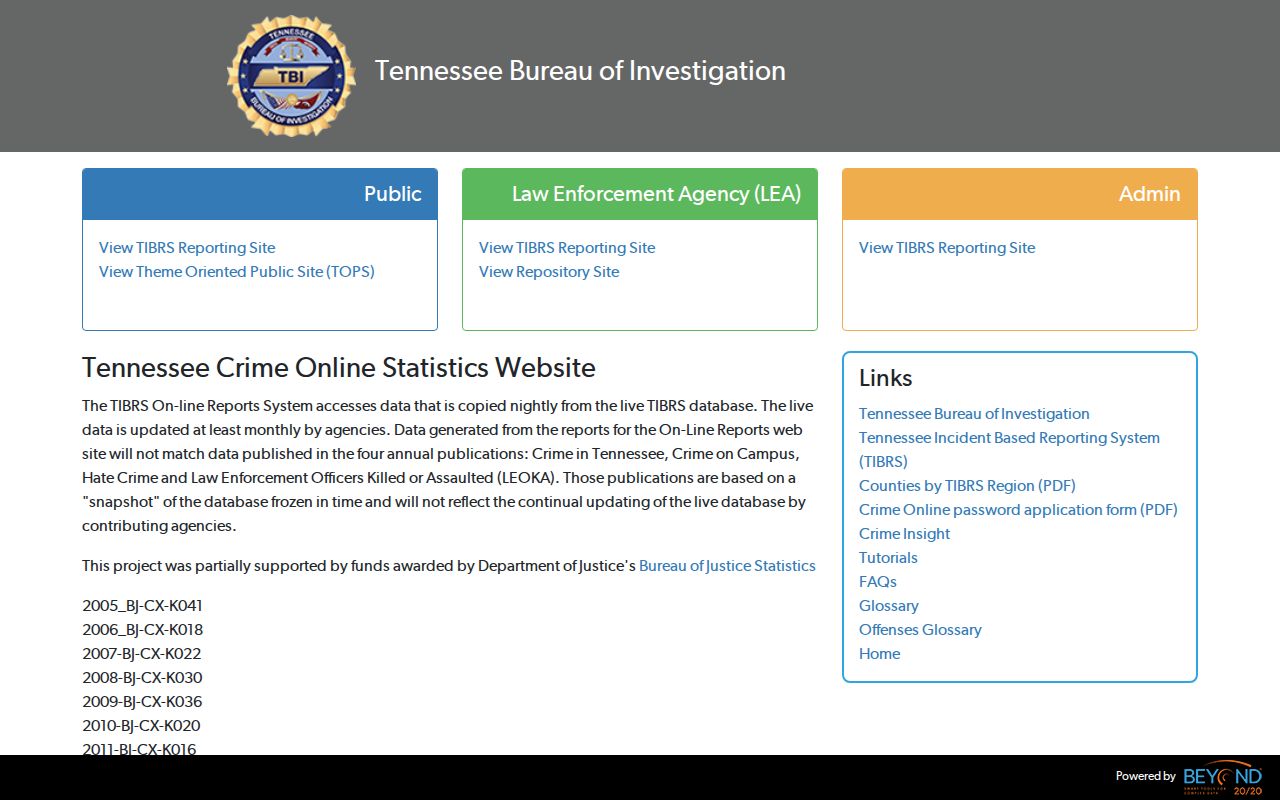
Use the numbers to understand trends, then return to the record custodian for a named event or case. Fayette County covers 704.78 square miles, and its incorporated police departments create their own reports. County totals and one city's activity are therefore not interchangeable. Somerville Code § 6-107, for example, requires a permanent daily police record of reported offenses, arrests, investigations, fire calls, and other activity, yet no public city arrest log was located.
Sealed, Expunged, and Restricted Records
Tennessee restricts juvenile histories, victim and minor identifiers, confidential registry data, and records sealed or removed by court order. TORIS omits ordinary juvenile matters unless the case moved to adult prosecution under T.C.A. § 37-1-134. A public court index may also show less than the clerk's full file when a statute, rule, or order limits access.
Dismissed, nolle-prosequied, no-true-bill, and not-guilty outcomes may qualify for no-cost expungement. Diversion and eligible convictions follow other rules and may involve costs. Official summaries describe baseline waiting periods of five years after completion for eligible misdemeanor and Class E matters and ten years for certain eligible Class C or D matters, but class alone does not establish eligibility. Current offense lists, prior-record limits, and completion of confinement, probation, fines, costs, and restitution all matter.
Start with the Fayette County court where the arrest occurred. The Circuit Court Clerk can provide the current petition and order process. For eligible conviction relief, the state directs the applicant to the District 25 District Attorney General's Somerville Criminal Office at 16814 Highway 64, phone (901) 465-7351. Keep a certified copy of any signed order.
Fayette County FOIL Supervision Records
FOIL answers a narrow but useful question: whether a person is currently or was formerly in TDOC felony custody or supervision. Search by last name, with first name as a narrowing field, or use a TDOC ID or State ID Number. A profile may show a photograph, felony status, facility or supervision location, offense, sentence, parole-hearing status, and release information. County jail pretrial bookings and local misdemeanor matters can be absent.
The TDOC Felony Offender Information Lookup shows the public search fields available for a Fayette County felony record.
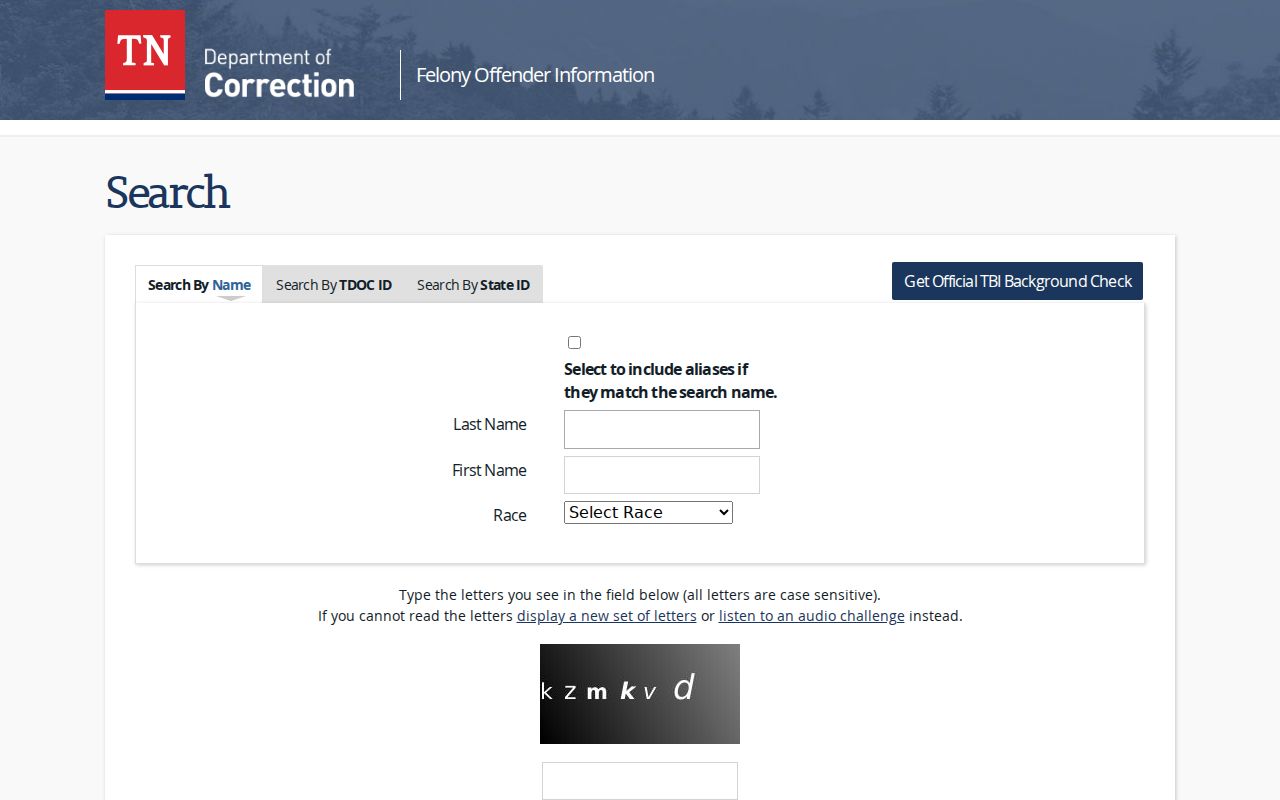
Fayette County is served by TDOC District 60. Its field office is at 12515 Highway 64 in Somerville, phone (901) 465-0558. Felony probation is ordered by a court, while parole is a conditional release decision made by the Tennessee Board of Parole and supervised by TDOC. When FOIL is unclear, compare it with the court judgment and ask the field office about the correct public-record route.
The Tennessee courthouse directory supplies the official routing entry for the local judgment behind that status.
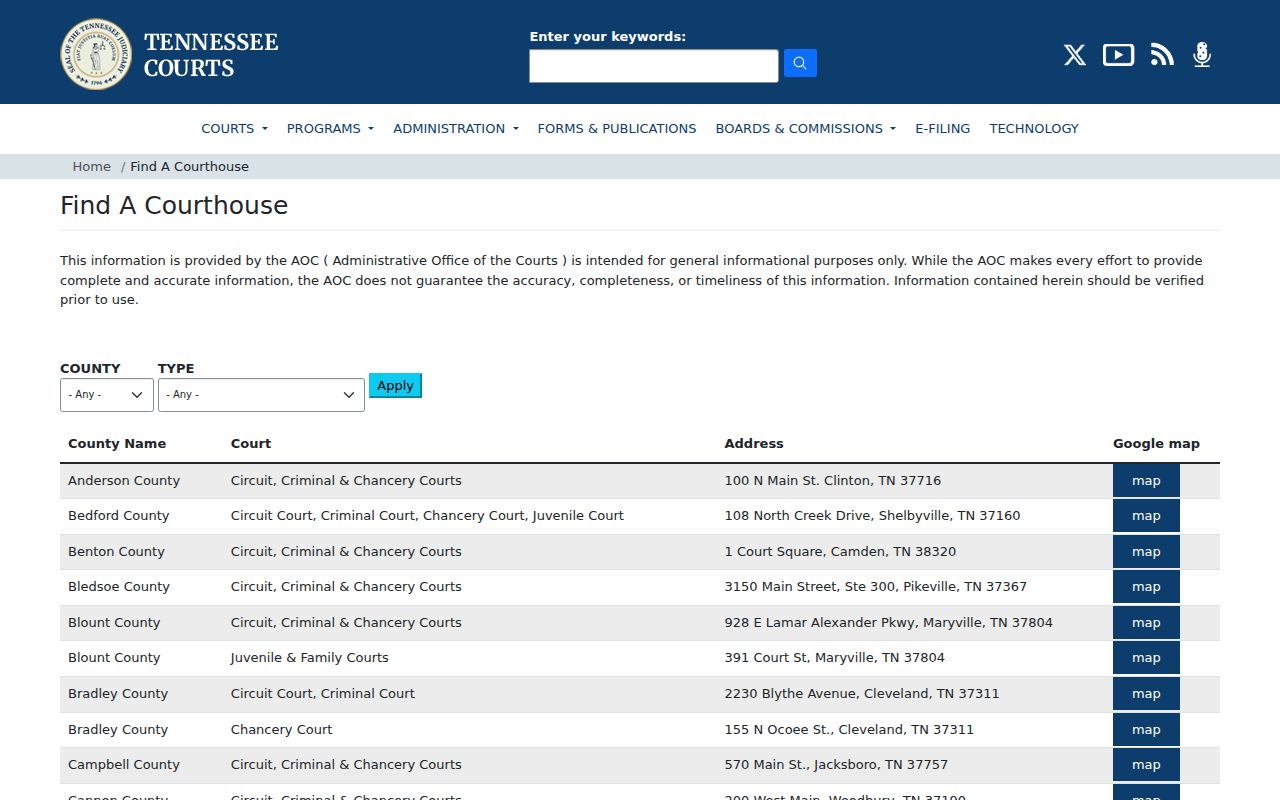
The directory is a route to clerks and courthouses, not a free statewide trial-court name search. Fayette County trial records still require contact with the local clerk.
Fayette County Criminal Records by City
Oakland, Somerville, and Piperton are Fayette County's three largest incorporated places in the official 2025 certified population series. Their police departments keep the reports made by their own officers, while city courts handle traffic, ordinance, and limited municipal matters. Custodial arrests generally route to the Fayette County jail, and county-level prosecutions move to the county courts. Start with the city office that created the record, then follow the event to the sheriff or clerk when the city record ends.
Oakland Criminal Records
8,936 certified population · Police records and Municipal Court contacts at Doss Circle.
Somerville Criminal Records
3,415 certified population · Police daily records and City Court files follow separate local routes.
Piperton Criminal Records
2,801 certified population · Highway 196 police and Municipal Court records require city contact.
Use the same population series for all three cards. Census estimates from a different series should not be mixed with the certified figures.