
Sex Offender Checks in Fayette County
The Tennessee Sexual Offender Registry is the primary public channel for a Fayette County sex offender check. The Tennessee Bureau of Investigation manages the statewide system from reports supplied by the agencies that register offenders. Selecting Fayette in the county field is the clearest place to begin a broad local search. A name search helps when the person is known, while city, ZIP, and map tools support neighborhood awareness. The results are not a list of everyone ever accused of a sex offense. They reflect people whose convictions and current legal duties place them in Tennessee's registry.
The Fayette County Sheriff's Office is the local registration point. It can answer questions about a Fayette registrant's reporting counter or suspected failure to comply, but it does not replace TBI's public search. For an address beyond Tennessee, use the national system. Search terms should be checked with care because similar names and changes in address can produce a misleading first impression.
Fayette County Sex Offender Office
Fayette County registrants report through the Sheriff's Office at the Criminal Justice Center, 705 Justice Drive, Somerville, TN 38068. Call (901) 465-3456 before visiting to confirm the current appointment process, reporting counter, and any fee. The sheriff lists administrative service hours of 8:00 a.m. to 4:00 p.m. Access to the complex changed with the State Route 460 bypass, so older directions may not lead to the usable entrance. The sheriff says vehicles must approach from U.S. Highway 64 east of Teague Store Road.
The local office accepts required reports and sends information into the state system. TBI remains the manager of the public database. Questions about state profile data may be directed to TBISORMGR@tbi.tn.gov or 888-837-4170. A person who believes a registrant has failed to report should give facts to law enforcement. Personal confrontation is unsafe and can cross legal lines.
Fayette County Sheriff's Office
705 Justice Drive
Somerville, TN 38068
(901) 465-3456
How to Search the Tennessee Sexual Offender Registry
Use the official search page and begin with the smallest set of reliable facts. County and location fields help when no full name is known. A direct TID number is best when that identifier is available. TBI's interface also may expose address or map controls for a proximity search. The following steps keep the search tied to the state source.
- Open the Tennessee registry and review its conditions and lawful-use notice.
- Enter a name, or choose Fayette County and add a city or ZIP code to narrow the area.
- Compare the result list by name, photograph, physical description, and reported location without assuming that one similar name proves identity.
- Open the full profile to read the classification, status, offense, addresses, and last report information.
| Field Label | Type | Required | Notes |
|---|---|---|---|
| Last Name | Text | Optional criterion | Main name route |
| First Name | Text | Optional | Narrows a surname search |
| City | Text or select | Optional | Address-based route |
| County | Dropdown | Optional | Select Fayette |
| ZIP Code | Text | Optional | Narrows the area |
| TID Number | Text | Optional | Direct Tennessee identifier |
| Map or Address | Map controls | Optional | Availability can vary by portal view |
The TBI registry search screen shows the fields used for a Fayette County registry lookup.
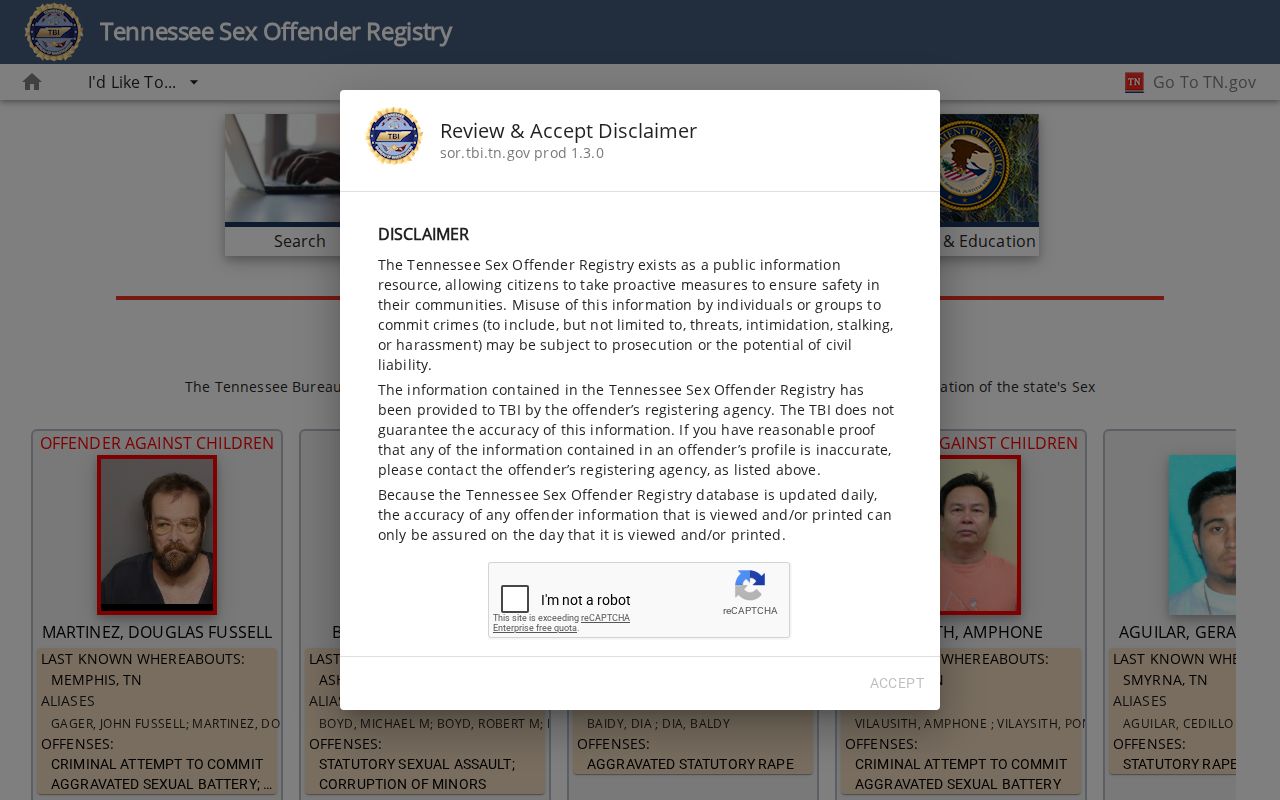
The official interface lets a reader combine county and identity fields instead of relying on a broad web name search.
Fayette County Registry Updates
TBI says its public registry updates daily from information submitted by registering agencies. Geographic information system data can refresh on a different overnight cycle. A recent address report may therefore reach the profile and map at slightly different times. The date shown on a profile matters. It should be read with the status and last registration fields, not treated as a guarantee that every fact was verified at the same moment.
A last registration or report date marked "Not Available" has a specific limit. TBI explains that the agency may not yet have received the required information. It does not, by itself, prove that the person failed to comply. Contact the Fayette Sheriff's Office or TBI when a date, status, or address appears inconsistent. Save the profile's TID number and describe the field at issue so the agency can locate the correct record.
Note: A screen capture can age quickly, so reopen the live Fayette County registry profile before relying on its current address or status.
Inside a Registry Profile
A public profile combines identity, location, classification, and reporting data. It can include images, physical traits, home and secondary addresses, supervision details, aliases, and offense information. Some entries also list a higher education institution and whether the registrant works at or attends it. The profile remains a statutory public record, not a complete court case file. The criminal judgment and filings stay with the court that handled the case.
| Name and Aliases | Primary name, reported aliases, date of birth, race, and sex. |
|---|---|
| Photo and Description | Images plus height, weight, eye and hair color, scars, marks, and tattoos when reported. |
| Addresses | Home, secondary, county, and possible school-related location fields. |
| Offense Data | Qualifying offenses and related record details supplied to the registry. |
| Classification | Tennessee classification and the duties linked to it. |
| Status and Dates | Status, last information update, last registration or report, and TID number. |
| Supervision | Supervision site and probation or parole officer fields when applicable. |
Fayette County Offender Classes
Tennessee uses its own statutory labels, chiefly "sexual offender" and "violent sexual offender." A violent juvenile sexual offender is another category, but that juvenile classification is not shown on the public website. These state labels should not be converted into assumed federal Tier I, II, or III labels. In 2025, Public Chapter 66 reinforced TBI's role in determining the proper Tennessee classification.
Classification controls the usual report schedule and possible duration. It can also be affected by the offense, number of qualifying convictions, and age of a victim. Read the profile and the TBI registry information page together. The classification is not a risk score created for casual comparison between people.
The official TBI information page lays out these Fayette County registry rules and common exceptions.
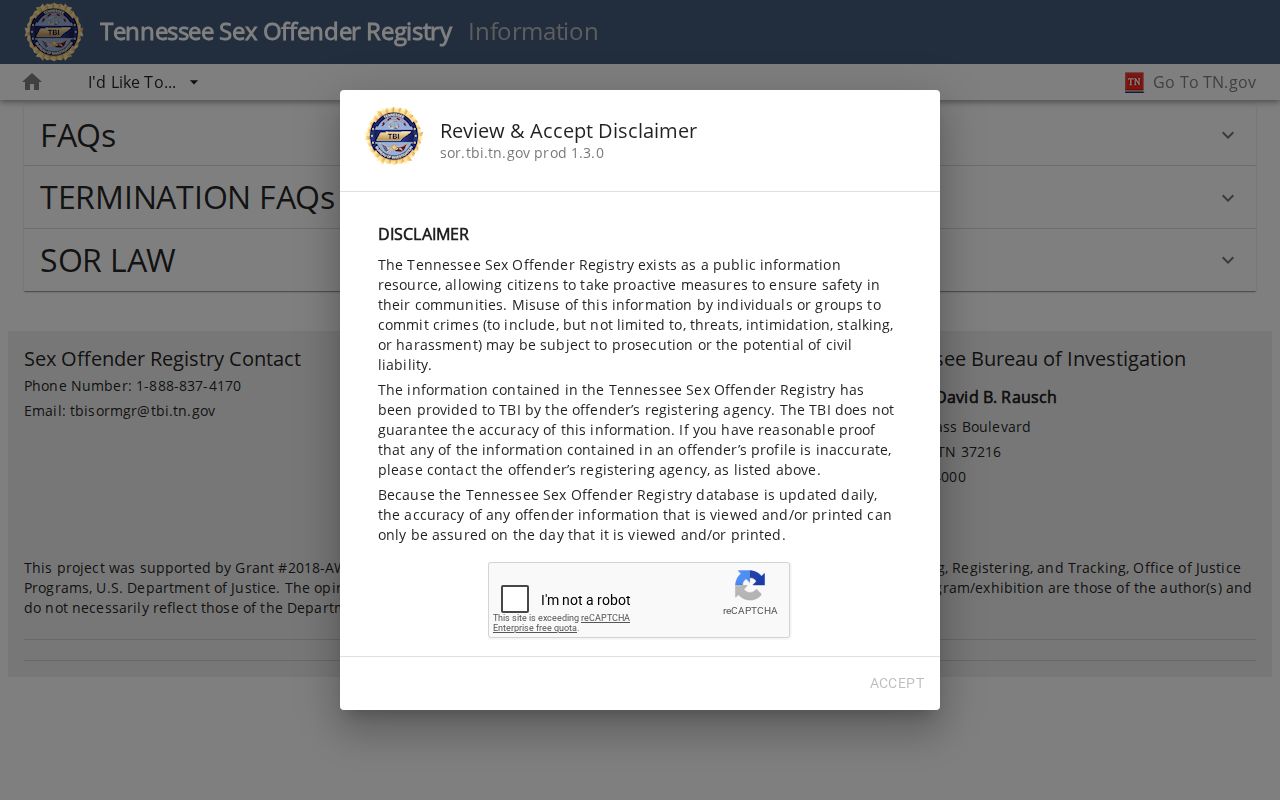
That state explanation is the proper source for report clocks and termination rules, which can change when Tennessee law is amended.
Tennessee Registration Levels and Requirements
Reporting frequency is not the same for all Tennessee registrants. Sexual offenders generally report around their birthdays. Violent sexual offenders report each quarter. Address and other changes usually have much shorter clocks. Online identifiers follow their own deadline. The table summarizes the state research, but the current TBI instructions and a person's classification control.
| Classification | Reporting | Duration and Public Note |
|---|---|---|
| Sexual offender | Annually, within 7 days before or after birthday; most changes within 48 hours | May seek termination 10 years after sentence expiration if eligible and substantially compliant |
| Violent sexual offender | Quarterly in March, June, September, and December; most changes within 48 hours | Lifetime registration; no ordinary termination route |
| Violent juvenile sexual offender | Statutory reporting schedule | Not displayed on the public website; different termination rules |
| Multiple qualifying convictions or victim under 13 | Depends on classification | Lifetime under the conditions described by TBI |
Online identifier changes carry a 72-hour report window. For certain people entering Tennessee from another jurisdiction, the duty generally lasts ten years after sentence expiration or five years after entry into Tennessee, whichever is later. Those rules have exceptions, so a profile question belongs with TBI or the registering agency.
Fayette County Registry Alerts
A full Tennessee detail page may offer an email alert option tied to that entry. This can help a resident monitor a profile without relying on an old saved page. Alert availability and controls should be checked on the live profile. TBI remains the source for Tennessee details, while the National Sex Offender Public Website searches participating jurisdictions across state lines.
NSOPW is useful when a person has moved, when a Fayette County search connects to another state, or when the relevant location is uncertain. It requires acceptance of its conditions and then routes results back to contributing jurisdictions. Its national layer does not replace the fuller Tennessee profile or the sheriff's local registration role.
The U.S. Department of Justice provides the national search used as the cross-state check for Fayette County residents.
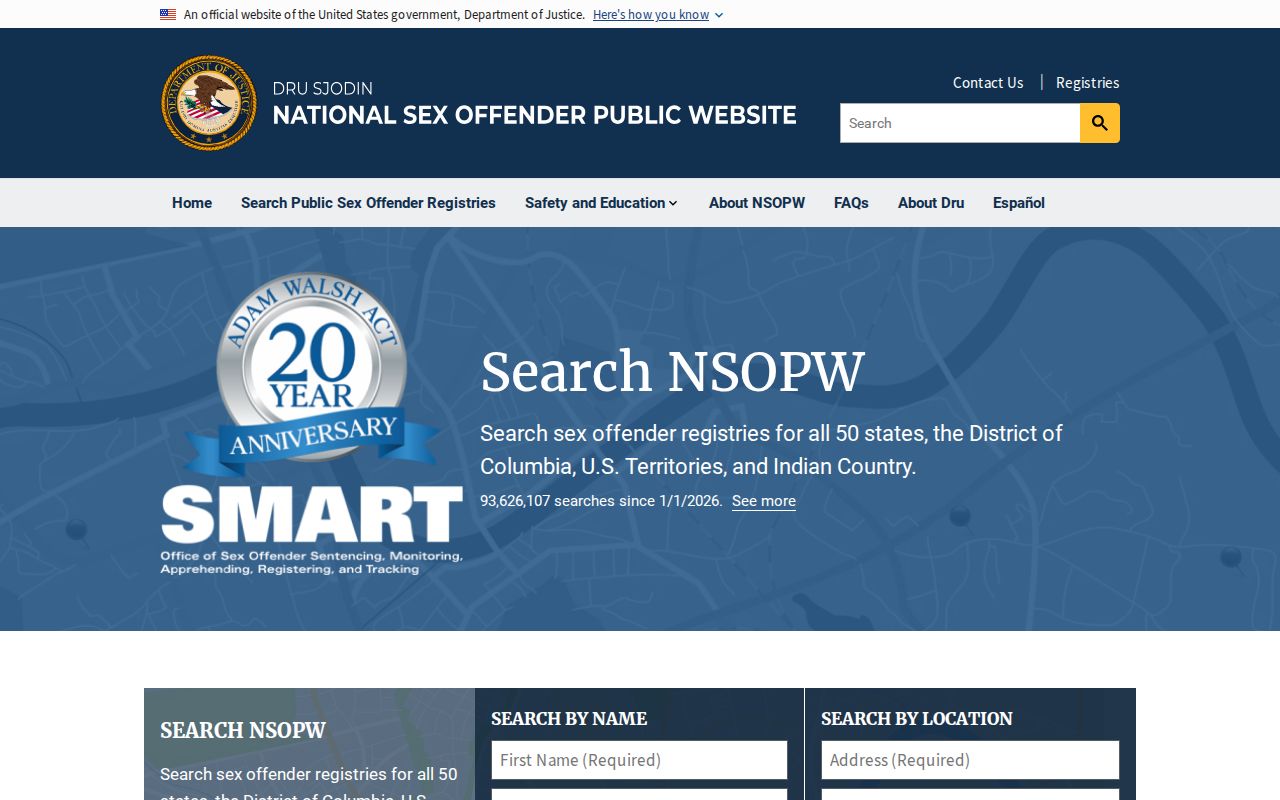
Use the national result to identify the responsible jurisdiction, then confirm facts in that jurisdiction's official registry.
Fayette County Registry Law in 2025
Tennessee Public Chapter 474 added registration for qualifying unlawful-photography convictions committed on or after July 1, 2025. That change can affect whether a newer conviction carries a registration duty. Public Chapter 66 also directed TBI to determine the proper classification. Both points appear in TBI's current registry information. They show why an older summary of qualifying offenses or a guessed federal tier can be wrong.
A reader trying to understand why a profile appeared, changed classification, or did not appear should begin with the conviction date and exact offense. The court judgment answers what conviction was entered. TBI answers how Tennessee's Registry Act applies to the listing. The Fayette Sheriff's Office handles the local report, but it does not rewrite the conviction or independently set the state classification.
Fayette County Registry Noncompliance
An absent profile can have several explanations. TBI lists an overturned conviction, terminated duty, a nonqualifying offense, a nonpublic violent juvenile classification, or noncompliance among the possibilities. Absence alone does not identify which one applies. Gather the facts that caused concern, such as a possible address conflict, and report them to the Fayette Sheriff's Office or TBI.
Do not publish accusations or try to verify an address through confrontation. Law enforcement can check nonpublic records and determine whether a duty exists. If the concern involves immediate danger, use the emergency channel. Routine registry questions should go through the published sheriff or state contacts.
Community Notification and Lawful Use
The registry supports personal, family, and neighborhood safety. It can help with a move, a route to school, travel, or awareness of reported locations. It cannot supply permission to harass a listed person or their household. The data may be incomplete, delayed, or misunderstood without the profile's classification and update fields. Verify the live record and use law enforcement for compliance concerns.
Use registry data lawfully: Tennessee's Registry Act, including T.C.A. § 40-39-206 and related provisions, does not permit threats, harassment, intimidation, or vigilantism based on registry information.